Advantages and Disadvantages of Buying an Existing Business
A balance of the main advantages and disadvantages of buying an existing business, helping to make the right decision.

Contents
Buying a business that is already operational is one of the quickest ways to enter a market or expand your activity. Instead of starting from scratch, you inherit customers, revenue, and an ongoing operation. However, this same "inheritance" brings risks that only careful analysis reveals. This guide presents an honest balance of the advantages and disadvantages of buying an existing business in Portugal, and what to check before proceeding.
Advantages of buying an existing business
The main advantages are related to the fact that the business is already operating — which reduces the time and uncertainty of the initial phase.
Customer base and immediate revenue
An operational business already has customers and turnover. This means it can generate revenue from day one, reducing financial risk and providing greater cash flow predictability — unlike a start-up, which may take months or years to reach break-even.
Ready infrastructure and team
Equipment, stock, IT systems, licenses, and often, an experienced team are already part of the business. This infrastructure accelerates the transition and avoids the heavy initial investment that starting a new operation would require.
Financial history to decide
Existing businesses have accounts, tax returns, and sales history that can be analysed to forecast future performance and support price negotiation. This transparency is one of the major differences compared to starting from scratch — and it is precisely the material that should be scrutinised in a thorough due diligence.
Established relationships and positioning
The acquisition includes relationships with suppliers, partners, and distributors, as well as brand recognition and reputation that would take years to build. These intangible assets have real value and are often the true reason for the purchase.
Disadvantages and risks to consider
On the other side of the scale are the risks of inheriting an operation that you did not build — and that may hide problems.
Initial cost and hidden liabilities
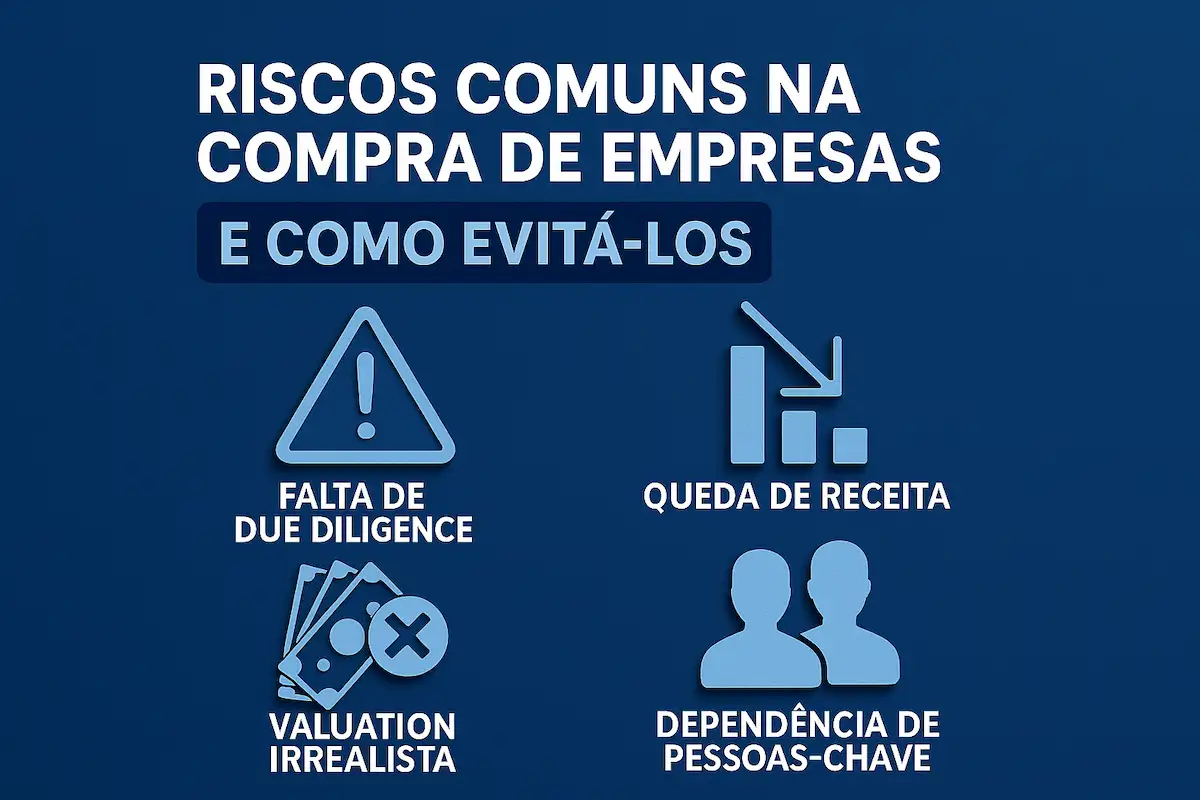
Buying a business typically requires a significant upfront investment. Worse than the price is what may come "hidden": debts, unfavourable contracts, litigation, or tax and labour liabilities that are not evident in the initial negotiation. This is the biggest risk of all — and the main reason to never forgo professional advice before signing.
Culture, people, and resistance to change
The company culture may not align with your management style, and the entry of a new owner generates uncertainty within the team. The risk of losing key employees shortly after the purchase is real and can destroy part of the value you paid.
Outdated systems and competition
The infrastructure or processes may be obsolete, requiring additional investment in modernisation. And the market may face competitive pressures that were not fully disclosed by the seller — hence the importance of analysing the sector, not just the business.
Seller's expectations
It is common for the seller to have price expectations above the actual value of the business, especially when there is an emotional attachment. This can make negotiations lengthy — and this is where an independent valuation makes a difference.
Buying the company or just the business? (shares vs business transfer)
A decision that changes the entire risk profile: acquiring the business through the purchase of shares (you take on the company and all its history, including liabilities) or acquiring only the establishment/assets through a business transfer (you take on the business, but not necessarily all the debts of the company). Each route has distinct tax and legal implications. We explained the differences in detail in the guide on business transfer vs. company purchase. The choice between the two should always be validated with a lawyer and an accountant, as the specific context depends on each case.
Factors to consider before buying
Complete due diligence. Financial, tax, legal, labour, and operational analysis to identify hidden risks and validate the seller's information.
Growth potential. Assess real opportunities — new markets, products, or operational improvements — and not just current performance.
Industry conditions. Declining or highly volatile sectors increase the risk of acquisition.
Transition plan. Define how you will manage employees, customers, and suppliers in the first months.
Professional advice. A lawyer and financial/accounting consultant are essential for an informed decision and to structure the business in the safest way.
Conclusion
Buying an existing business can be an excellent strategy for those looking to accelerate market entry or expand — as long as the advantages (customers, revenue, infrastructure) are weighed realistically against the risks (cost, hidden liabilities, people). With detailed analysis and professional support, it is possible to maximise benefits and avoid the most common pitfalls.
Ready to take the next step? See the businesses for sale in Portugal or consult our guide on how to buy a business.
Frequently asked questions
Is buying an existing business safer than starting from scratch?
Not always. It has the advantage of having customers and immediate revenue, but it carries the risk of inheriting debts and hidden liabilities. Safety largely depends on the quality of the due diligence conducted before the purchase.
What are the biggest risks of buying an existing business?
Hidden liabilities (debts, litigation, unfavourable contracts, tax and labour obligations), the departure of key employees, and paying a price above the actual value. Thorough due diligence and an independent valuation help mitigate these risks.
Should I buy the shares of the company or just the business?
It depends on the case. Buying the shares transfers the entire company (including liabilities); the business transfer transfers the establishment/assets with a different risk profile. The decision has tax and legal implications and should be validated with a lawyer and an accountant.
Next step
Move from research to real opportunities
Browse available businesses and apply what you have just learned to the opportunities that fit your goals.