How to Finance the Purchase of a Company in Portugal
The main financing options for acquiring a company, including bank credit, investors, and personal financing alternatives.

Contents
Financing the purchase of a company rarely depends on a single source. The structure can combine equity, bank credit, seller financing, or investors, depending on the price, cash generation, guarantees, and the buyer's profile. Before making commitments, confirm conditions with the lender and validate the impact on the company's cash flow.
Buying an already operating company is often a faster and safer route than starting from scratch — but it immediately raises the central question: how to finance the acquisition? Few buyers have the entire amount in equity, and the good news is that it is rarely necessary. There are several ways to finance the purchase of a company in Portugal, and the most common is to combine two or three of them.
In this guide, we cover the main options, when they make sense, and what lenders expect from you.
1. Bank Credit
A bank loan is the most commonly used way to finance the acquisition of a company. Portuguese banks primarily assess the business's ability to generate sufficient cash flow to repay the debt, in addition to the guarantees it presents.
Acquisition loan: specific credit to buy the company or its shares, usually with terms of 5 to 10 years and requiring guarantees (real estate, equipment, or pledging the shares themselves).
SME lines: if the company to be acquired is an SME, you may have access to lines with more favorable conditions, some with mutual guarantees.
What the bank will want to see: a solid business plan, the historical accounts of the target company, your equity input, and guarantees. The more predictable the business's cash flow, the better the conditions.
2. Public Support and Guarantee Lines
In Portugal, there are public instruments that can support the acquisition, especially the IAPMEI and the Portuguese Development Bank , through credit lines and guarantee mechanisms that reduce the risk for the bank and, consequently, facilitate approval.
The conditions and available programs vary over time, so you should confirm the current lines with IAPMEI, the Development Bank, or your bank before proceeding.
3. Seller Financing
This is often the most undervalued option — and one of the most powerful. In seller financing , part of the price is not paid at the time of purchase: it is paid to the former owner over time, often with interest.
Advantages for the buyer:
Reduces the amount you need to finance with the bank.
Signals confidence: a seller willing to accept payment over time believes in the continuity of the business.
Aligns interests — the seller has an incentive to ensure a smooth transition.
It is common to combine this with an earn-out , where a portion of the price depends on the future performance of the company. These mechanisms should always be formalized in a contract, with legal support.
4. Investors and Capital
If the company has growth potential, you can finance part of the purchase with third-party capital:
Business angels: invest their own capital in exchange for equity, also bringing experience and a network of contacts.
Venture capital: for operations with strong scaling potential; usually requires significant equity participation and involvement in management.
Partners or co-investors: join one or more partners to gather the necessary capital and share the risk.
This route dilutes your ownership but can enable larger acquisitions than you could achieve alone.
5. Equity
Almost all operations require an equity input from the buyer — not only because lenders rarely cover 100%, but because it demonstrates commitment. As a practical rule, the larger your input, the better the conditions you can negotiate and the lower the burden of debt service on the business's cash flow.
How to Choose (and Combine) Options
In practice, most acquisitions combine sources — for example, equity + bank credit + a portion in seller financing. When structuring the financing, consider:
Can the cash flow support the debt? The business should generate enough cash to pay the installments and continue to operate comfortably.
What guarantees do you have to offer?
What is your level of personal exposure that you are willing to assume.
What part can you negotiate with the seller instead of financing externally.
Before finalizing the capital structure, also confirm how much it costs to buy a business and what the total amount of the operation is.
Before Signing
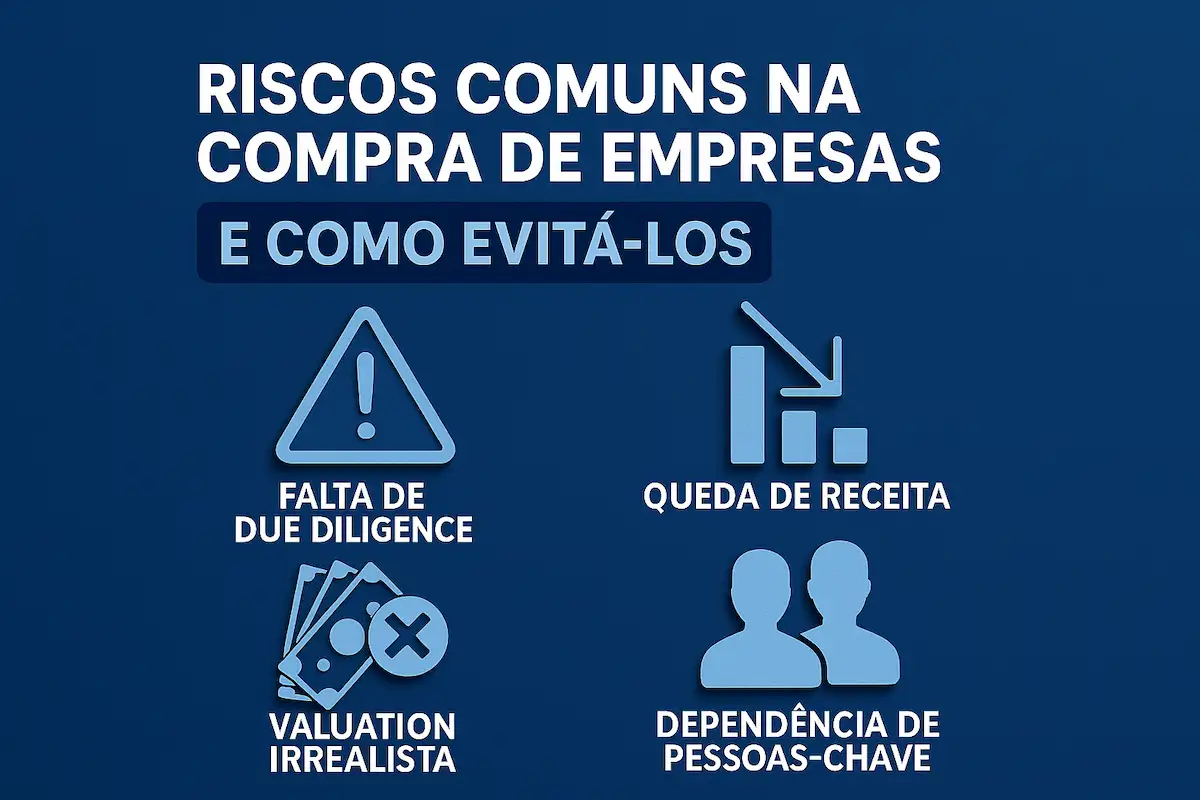
Financing always goes hand in hand with due diligence : no financing structure compensates for buying a company with hidden problems. Before closing, validate the accounts, debts, and contracts of the target company. See our due diligence checklist.
Credit conditions, rates, and support programs change frequently and depend on your specific case. Always confirm the current numbers with the bank, and in decisions regarding structure and contracts, seek advice from a financial consultant and a lawyer.
Found a company you want to buy? See the companies for sale and proceed with a well-structured proposal.
If you are still structuring the complete process, also see how to buy a company.